
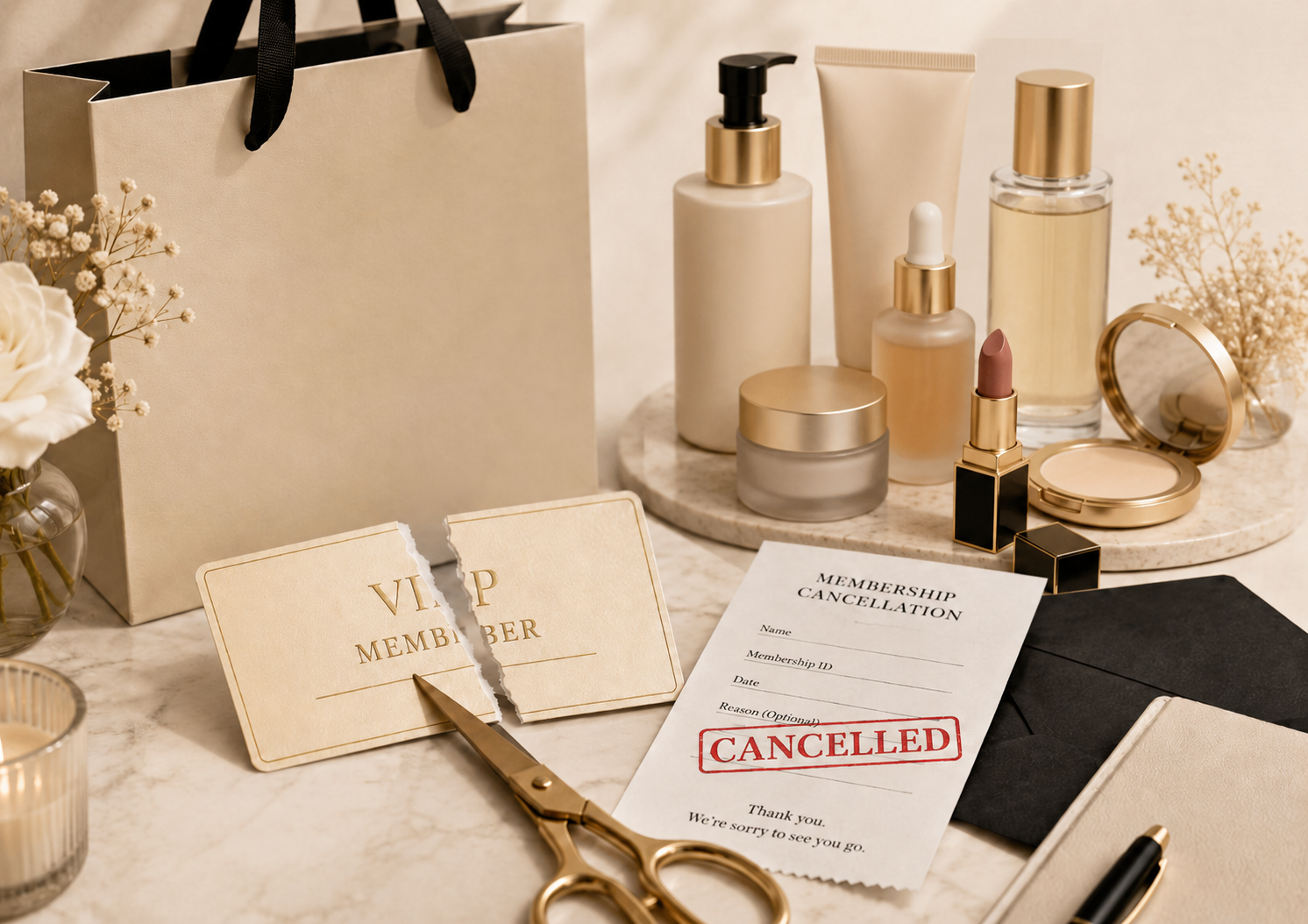
When the Interview Becomes the Brand
On candidate experience, emotional loyalty, and a small gift I gave to a stranger
Somewhere in the past year, something shifted on Taiwanese social media.
Threads, Meta’s answer to the post-Twitter world, has quietly become in Taiwan what the office kitchen used to be — the place where people say the things they’ve been keeping politely to themselves. Lately, what people have been saying, with striking frequency, is this: I had an interview with that brand. And it was nothing like what I expected.
Some of these posts have reached a million views. A million — for an account someone presumably opened on a Tuesday afternoon to process a difficult Wednesday morning.
I noticed this trend the way you notice weather changing: gradually, then all at once. First one post, then a cluster. A luxury cosmetics brand, then a premium lifestyle retailer, then a wellness company with an impeccably curated Instagram feed. The brands people named were, almost without exception, the kind you’d find in a beautiful coffee table book: aspirational, warm, carefully composed. Their visual identity alone could make you feel something. Their campaigns spoke of craftsmanship, sustainability, human connection, the belief that everyday rituals could carry deeper meaning.
And yet.
The gap between how these brands looked and how they apparently made their candidates feel was, in some cases, startling enough to earn a million pairs of eyes.
We have spent the last decade treating employer branding as a separate discipline from consumer branding — a parallel track, maintained by HR rather than marketing, measured in Glassdoor ratings rather than brand equity. Companies build employer brand strategies the way they build product campaigns: with dedicated budgets, targeted messaging, carefully produced videos of employees in open-plan offices who appear, uniformly, to be thriving. LinkedIn articles theorize about it. HR conferences discuss its ROI. It is treated, in other words, as a performance.
But what the Threads era has quietly revealed is something that perhaps should have been obvious all along: the performance is not the brand. The interaction is.
A brand is not its tagline. It is not its packaging, or its campaign, or the mood it manufactures in a flagship store. A brand is the accumulated weight of every human exchange that happens in its name — including the email that took three weeks to reply to, the interview that began twenty minutes late without acknowledgment, and the role that dissolved into something entirely different once you were actually in the room. These are not small administrative failures. In a world where every experience is one screenshot away from public record, they are brand decisions — made by people who may not realize they are making them.
This is especially consequential for lifestyle brands. Beauty, wellness, food, craft, sustainability — these are categories built almost entirely on emotional contract. The consumer is not simply purchasing a product. They are purchasing a value system, an aesthetic commitment, a quiet signal about who they are and what they believe. They are trusting that what the brand presents outwardly is true inwardly — that the warmth in the campaign reflects warmth in the culture, that the care taken with ingredients extends to the care taken with people.
When the human experience behind that brand turns out to be inconsistent with its image — when the candidate experience, the employee experience, the texture of daily organizational life does not match the story the brand tells about itself — the rupture is not a small thing. It becomes a question about the nature of the brand itself: Is any of this real?
I prepared deeply for the interview.
That sentence doesn’t quite capture it. I spent days studying the brand’s history, their sourcing philosophy, their product narrative across channels. I read about their agricultural partnerships — the care they had taken to secure local raw materials, to build relationships with farmers, to refuse the easier path of imported ingredients simply because the harder path was more honest. I analyzed their digital footprint. I thought about their content strategy, their SEO architecture, the emotional arc of a first-time customer and what it would take to earn their loyalty. I wrote proposals. I stayed up later than I should have, not because the deadline required it, but because I had genuinely fallen into the research.
I don’t say this to sound diligent. I say it because there is a meaningful difference between preparing for a job and preparing for an encounter with something you actually care about. There are brands you research because you need the work, and there are brands you research because you want to understand them — because something in their story made you lean forward. This was the second kind. They had built something patient and slow and rooted: a brand that had refused to rush, that had chosen the longer arc of trust over the shorter arc of volume.
I walked into the interview with something that I can only describe as genuine excitement, which is not, for me, a particularly natural state.
Then — slowly, over the course of the conversation — something began to shift.
It was not a dramatic unraveling. No one was unkind. The people I met were thoughtful, clearly capable, and in their way, genuinely trying. But as the meeting progressed, it became evident that the organization had not yet fully decided what it was looking for — or, more precisely, that the role had been imagined before the structure that would support it had been built. They wanted, as I understood it, someone who could elevate content strategy, who could think at a higher level, who could bring coherence to the brand’s communication across channels. These are real ambitions. But the organizational conditions for that kind of work — the clarity of mandate, the internal architecture of decision-making, the readiness to receive and act on strategic input — were still forming.
I am not describing this as a criticism. Organizations growing beyond a certain stage often don’t know exactly what they need until they start meeting people. That is not malicious. It is simply the gap between where a brand wants to be and where it currently is — and that gap can feel very wide, from the inside of a room where you are trying to figure out what the conversation is actually about.
What I noticed, though, was something quieter: the slow, almost imperceptible loosening of the emotional connection I had walked in carrying.
Brand loyalty — real loyalty, not the kind maintained by a points system — is built on coherence. On the sustained feeling that a brand behaves the same way whether or not anyone is watching. When a brand that presents itself as intentional, values-driven, and human turns out to have an internal reality that is still catching up to its image, there is a particular kind of disappointment in that. Not anger. Not betrayal, exactly. Something more like the feeling of finishing a book that has been almost extraordinary — and finding that the last chapter doesn’t quite resolve, that somewhere in the writing the author lost the thread they had been pulling so carefully for three hundred pages.
You don’t resent the book. But you hold it a little differently on the way home.
At the end of the interview, they gave me a gift — a beautifully printed booklet about their sourcing philosophy, and a small product from their line. It was, genuinely, lovely. The kind of thing made with visible care, the kind of thing that under other circumstances might have deepened my already existing affection for the brand.
I held it on the way home and tried to locate what I was feeling.
It wasn’t resentment. It wasn’t even disillusionment, exactly. It was something more subtle — the strange experience of having invested real attention and genuine enthusiasm into something, and emerging from the encounter with a fraction of what I had carried in. The gift in my hands was beautiful. The story behind it was real. The farmers and the land and the slow work of building something honest — all of that remained true. And yet something had recalibrated, quietly and without my permission, inside the hour.
This is, I think, the underexamined cost of candidate experience. Not the dramatic failures — the ghostings, the open hostilities, the offers rescinded by email — but the smaller, more ordinary misalignments between image and encounter. The moments where nothing technically goes wrong, but something emotionally does. Where the aspiration of the brand and the reality of the organization reveal themselves, however gently, to be traveling at different speeds.
Later that afternoon, I stopped at a small shop to buy cream puffs.
The salesgirl behind the counter was working hard. That’s the most accurate description: she was genuinely, visibly trying — explaining flavors, suggesting combinations, performing all the effortful, often thankless small tasks of retail work with a brightness that didn’t look practiced. It looked like the real thing.
I don’t know what moved me to do what I did next.
I held out the gift — still in its packaging, the beautiful booklet included — and told her simply that I had interviewed with this brand today, and that somehow, afterward, I hadn’t felt very good.
She looked at me for a moment.
Then she took the gift carefully, walked back to her counter, and placed it down with what I can only describe as deliberateness. She didn’t just set it aside. She settled it somewhere secure, somewhere it wouldn’t be disturbed. Then she returned, and thanked me — not effusively, not in the performed register of customer service, but quietly and with what felt like real weight behind it.
That small sequence of gestures — the pausing, the walking back, the making sure it was safe before anything else — has stayed with me in the hours since.
She could have said thank you immediately, the way you do when a stranger offers something unexpected. Instead, she made sure the gift was cared for first. There was something in that instinct — a wordless respect for the object, for the gesture, for the small, improbable exchange between two people who didn’t know each other’s names — that felt, if I am being honest, more aligned with everything that brand claimed to stand for than anything that had happened in the interview room.
I have been turning this over in my mind since.
We speak about brand experience as though it belongs to marketing departments — to campaigns, visual identity, carefully composed photography, the emotional arc of a sixty-second film. But brand experience is, at its most fundamental, simply human experience: the texture of what it feels like to encounter a company through the people who carry it, whether or not those people know they are carrying it at that particular moment.
Employer branding and consumer branding are converging not because a consulting firm decided they should, but because people have started noticing. Because a million people clicked on a Threads post about a job interview gone quietly wrong. Because we no longer cleanly separate how a brand treats its customers from how it treats the people who want to work there, or the people who pass through its ecosystem in any capacity. Because emotional consistency — the feeling that a brand behaves the same way whether or not anyone is watching, whether or not there is anything to gain — is increasingly the thing that determines whether loyalty holds.
There is a specific kind of affection we develop for brands that feel true to themselves across every register. Not just in the campaign, but in the hiring process, in the vendor email, in the way a junior employee speaks about where they work. This consistency is not something that can be manufactured with a strategy document. It has to come from somewhere real — from a culture that genuinely holds the values the brand claims to hold, that treats coherence not as a communications goal but as a way of operating.
The brands that will earn something durable in this era may not be the ones with the most beautiful creative. They will be the ones whose human interactions — even the small ones, even the ones no one planned for — feel like they come from the same place as the image.
I gave a brand’s gift to a stranger today, and the stranger handled it more carefully than I expected.
That’s the whole story. And it’s also, I think, the only conclusion worth drawing: that genuine warmth is not something a brand can centrally deploy. It lives, or it doesn’t, in the texture of ordinary interactions — in the way someone chooses to pause before saying thank you, in the impulse to make sure something fragile is safe before moving on.
Sometimes the most honest version of a brand is not found inside its campaigns or its founder’s interviews or its award-winning packaging.
Sometimes it’s in the way a stranger crosses a room to make sure a gift doesn’t fall.